
By Lewis Rennison — B2B Demand Director & Fractional CMO
The old Rule of 7 said prospects need to see your message seven times before taking action. In 2026, that’s not wrong — it’s incomplete. The new model isn’t about how many times. It’s about which channels, in which sequence, and how each touchpoint compounds on the ones before it.
The Rule of 7 was coined in an era of mass media marketing. The logic was simple: repetition overcomes resistance. It was never particularly scientific, but it pointed at something real — human beings need repeated exposure to a brand before they trust it enough to consider buying.
What’s changed is the mechanism. In a noisy digital environment where everyone is broadcasting, volume of exposure matters far less than quality of exposure. Seven impressions from seven LinkedIn ad placements in a row is not seven meaningful touchpoints. It’s one touchpoint repeated until it becomes wallpaper.
What the Mere Exposure Effect Actually Means for B2B
The Mere Exposure Effect is a psychological phenomenon: people develop preference for things simply because they’re familiar with them. In a B2B context: the prospect who has seen your founder’s LinkedIn posts, seen your ads in the feed, read one of your frameworks, and visited your website twice has a fundamentally different psychological relationship to your brand than someone who’s seen your ads seven times.
That’s why multi-channel presence produces compounding returns — not just additive ones. Each channel builds on the context established by the previous channels. The content makes the ad more meaningful. The website visit makes the email feel personal. The whole is significantly more than the sum of the parts.
The Rule of 7 Channels — A Framework
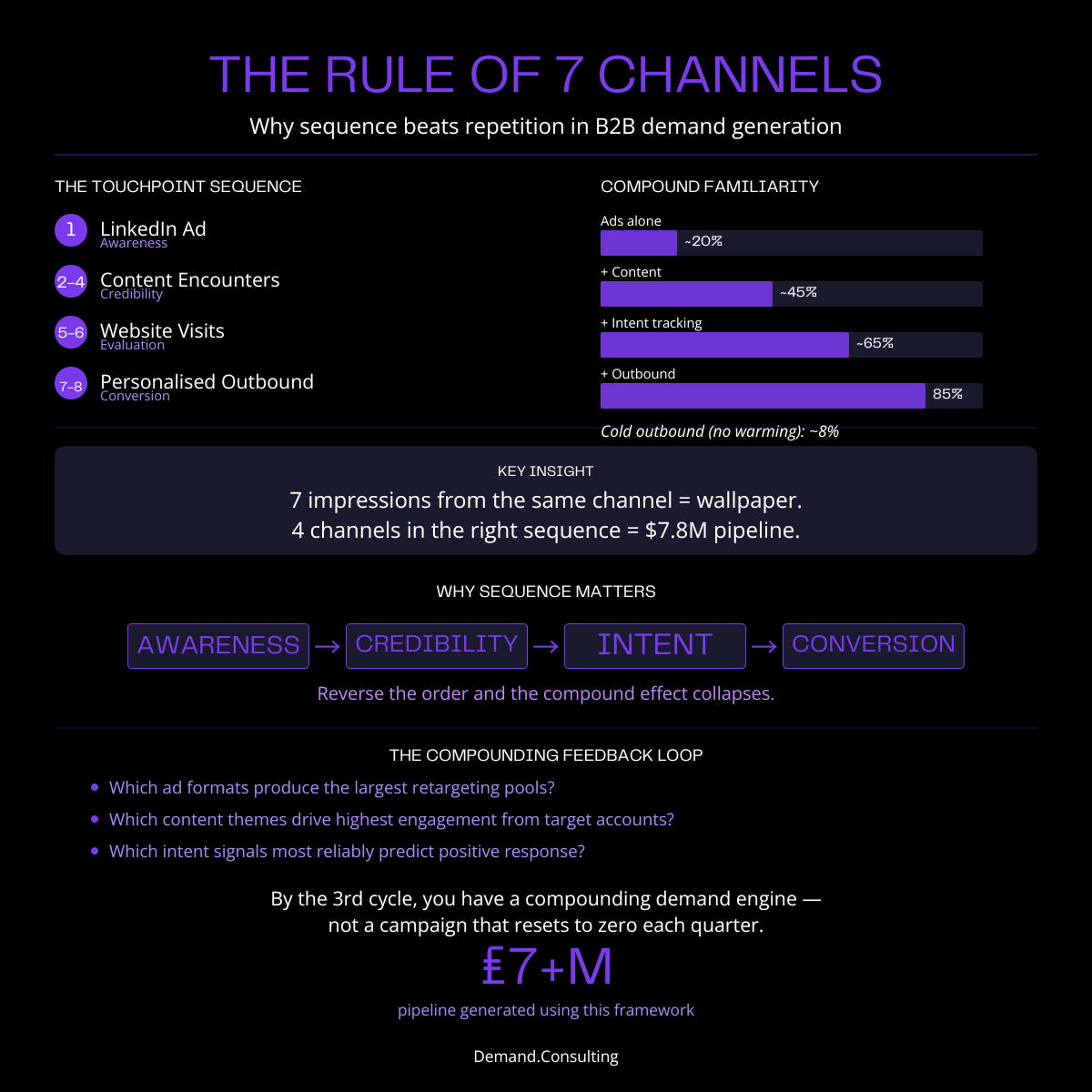
The specific touchpoint map that underpinned the $7.8M pipeline result:
- Touchpoint 1: LinkedIn Ad impression (awareness, recognition)
- Touchpoints 2–4: 3 content encounters (posts, articles — building credibility)
- Touchpoints 5–6: 2 website visits (case studies, pricing — active evaluation signals)
- Touchpoints 7–8: Personalised outbound email + follow-up (conversion)
Eight touchpoints across four distinct channels. Each one builds a different type of familiarity. And the last touchpoint references the journey explicitly.
Compound familiarity by channel:Ads alone: ~20%+ Content: ~45%+ Intent tracking: ~65%+ Outbound: 85%+Cold outbound with no warming: ~8%
Why the Sequence Matters as Much as the Count
Reverse the order and the compound effect collapses. If outbound comes before content, the email lands cold even if the prospect subsequently sees your ads. The trust-building sequence has to run in the right direction: awareness before credibility, credibility before intent, intent before conversion.
This is why “just adding more touchpoints” doesn’t solve the problem. More emails in a cold sequence produces more unsubscribes, not more responses. The architecture of the touchpoints — the order, the channel diversity, the way each one builds context for the next — is what creates the compound effect.
The practical implication: Before you add more volume to any channel in your demand programme, ask whether the sequence is right. Are you running ads before outbound? Is your content thematically aligned with your ad messaging? Are your intent signals triggering outreach at the right moment? Fix the sequence before increasing the volume.
The Feedback Loop That Makes It Compound Over Time
The compound effect isn’t just about what happens within a single prospect’s journey. It’s about what the data from each cycle teaches you for the next one. Which ad formats produced the largest retargeting pools? Which content themes produced the highest engagement from target account contacts? Which intent signals most reliably predicted a positive response?
A system that captures and uses this data gets progressively more effective. By the third cycle, you have a compounding demand engine — not a campaign that resets to zero each quarter. That’s the real meaning of “compound effect” in a B2B demand context.
Lewis Rennison
B2B Demand Director & Fractional CMO — demand.consulting